Never go into overdraft again: keep your account in the black
Your salary has arrived, the rent goes out, and the rest should be enough for the month. Still, the account sometimes goes negative: an annual bill, two direct debits on the same day, a salary that arrives a few days later. Usually it isn’t a problem of money but of timing. And that can be planned.
Why it gets tight just before payday
- Annual and quarterly fees: car insurance, liability insurance or the broadcasting fee don’t come every month and therefore surprise you.
- Many direct debits at once: rent, electricity, phone and insurance are often debited in the first days of the month.
- Salary later than expected: if payday falls on a weekend or holiday, the money sometimes only arrives afterwards.
- Delayed card payments: some payments only appear in the account days later.
| Balance on 20 October | €900.00 |
| Car insurance on the 25th | −€486.00 |
| Shopping and direct debits until month end | −€520.00 |
| Balance on 31 October | −€106.00 |
|---|
What the overdraft costs
An arranged overdraft is convenient but expensive: the interest on it is usually much higher than for other loans. If you go beyond the agreed limit, it can get even more expensive. How high the interest is at your bank is shown in its price list or in online banking.
How to prevent it
- Set a bufferA fixed amount that always stays in the checking account, for example part of the rent. It absorbs shifted debits and small surprises.
- Move debit datesMany providers let you choose the day of the direct debit. Put large amounts shortly after your salary arrives.
- Spread annual costsPut a fixed amount aside every month for annual fees, and the money is there when the bill comes. How that works is explained in Plan for annual expenses.
- Look aheadOnce a week: what’s still going out until the next payday? Is the balance enough for it?
- Move money in timeIf it gets tight, move money from your savings account to the checking account before the debit comes, not after.
If you’re already in the red
- Balance it quickly: every day in the red costs interest. If you have savings in a savings account, moving them is usually cheaper.
- Find the cause: was it an exception or does it happen every month?
- Talk to your bank if you use it permanently: if you need the overdraft regularly, ask for a cheaper solution and pay down the amount step by step.
- Build an emergency fund: so that your own money is enough next time. More in Building an emergency fund.
How it works in Ausgabentracker
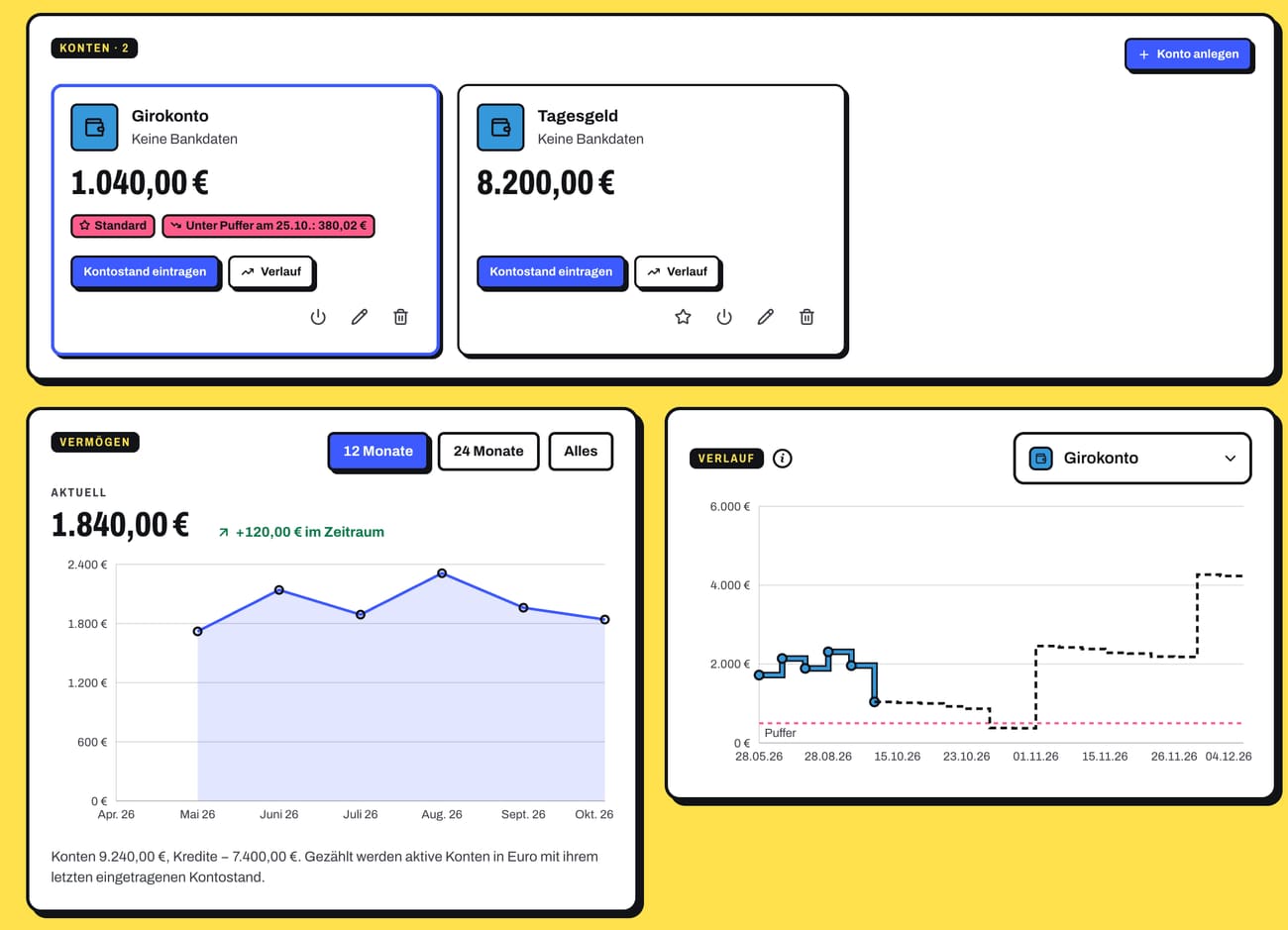
Ausgabentracker looks 60 days ahead for every account: from today’s balance, the open debits and your income. If an account is forecast to go negative or below your own buffer, the app speaks up before it happens.
- Forecast as a dashed line in every account’s history
- Your own buffer per account (“Warn below”), otherwise a warning only below €0
- A tip in the overview and a notification by email or push
- Reserve for annual costs: insurance & co. as a fixed monthly rate
Frequently asked questions
How big should the buffer be? There’s no rule of thumb. A good start is the amount of the largest debit that can come before payday, or part of the rent.
Isn’t a buffer the same as an emergency fund? No. The buffer stays in the checking account and absorbs timing shifts. The emergency fund is kept separately and is for real emergencies like a broken washing machine.
Can I get rid of the overdraft entirely? With many banks the limit can be reduced or set to zero. Direct debits without cover are then returned, though, which can cost fees of their own. A buffer is usually the better solution.