
What’s really left at the end of the month?
On the 10th of the month there’s a decent amount in the account; by the 25th it’s almost gone. That’s rarely because of one big bad purchase, but because the balance only shows what has already happened. The rent, the insurance and the gym haven’t been debited yet, but the money already belongs to them.
Why the balance is misleading
The balance is a snapshot. It knows nothing about the direct debit coming the day after tomorrow. If you decide by the balance, you spend money that’s already committed and wonder at the end of the month.
A number that looks ahead is more helpful: freely available until the end of the month. It takes into account everything that’s certain to go out.
How to calculate it
- Current balanceOnly the checking account your expenses go out from. Savings account and investments stay out of it.
- Minus fixed debits until the end of the monthRent, insurance, subscriptions, loan payments, standing orders, including to your savings account.
- Minus planned everyday spendingWhat you still need for groceries, fuel and so on until payday, ideally derived from your budgets.
- Result: freely availableYou can spend this without anything missing at the end of the month.
| Checking account balance | €2,480.00 |
| Still open: rent on the 28th | − €980.00 |
| Still open: electricity on the 20th | − €78.00 |
| Still open: streaming on the 17th | − €17.99 |
| Still open: savings rate on the 30th | − €200.00 |
| Groceries until month end (remaining budget) | − €190.00 |
| Freely available until month end | €1,014.01 |
|---|
What to do with the number
- Spontaneous purchases: if the amount is below what’s free, you can buy without a guilty conscience.
- React early: if the number gets tight in the middle of the month, there’s still time to cut back on leisure or eating out.
- Surplus at month end: distribute what’s left deliberately, for example into the emergency fund or a savings goal, instead of leaving it in the checking account.
Several accounts
If you have a joint account and your own account, calculate for each account separately: which debits go out from which account? Don’t count reserves in a savings account, otherwise things look better than they are.
How it works in Ausgabentracker
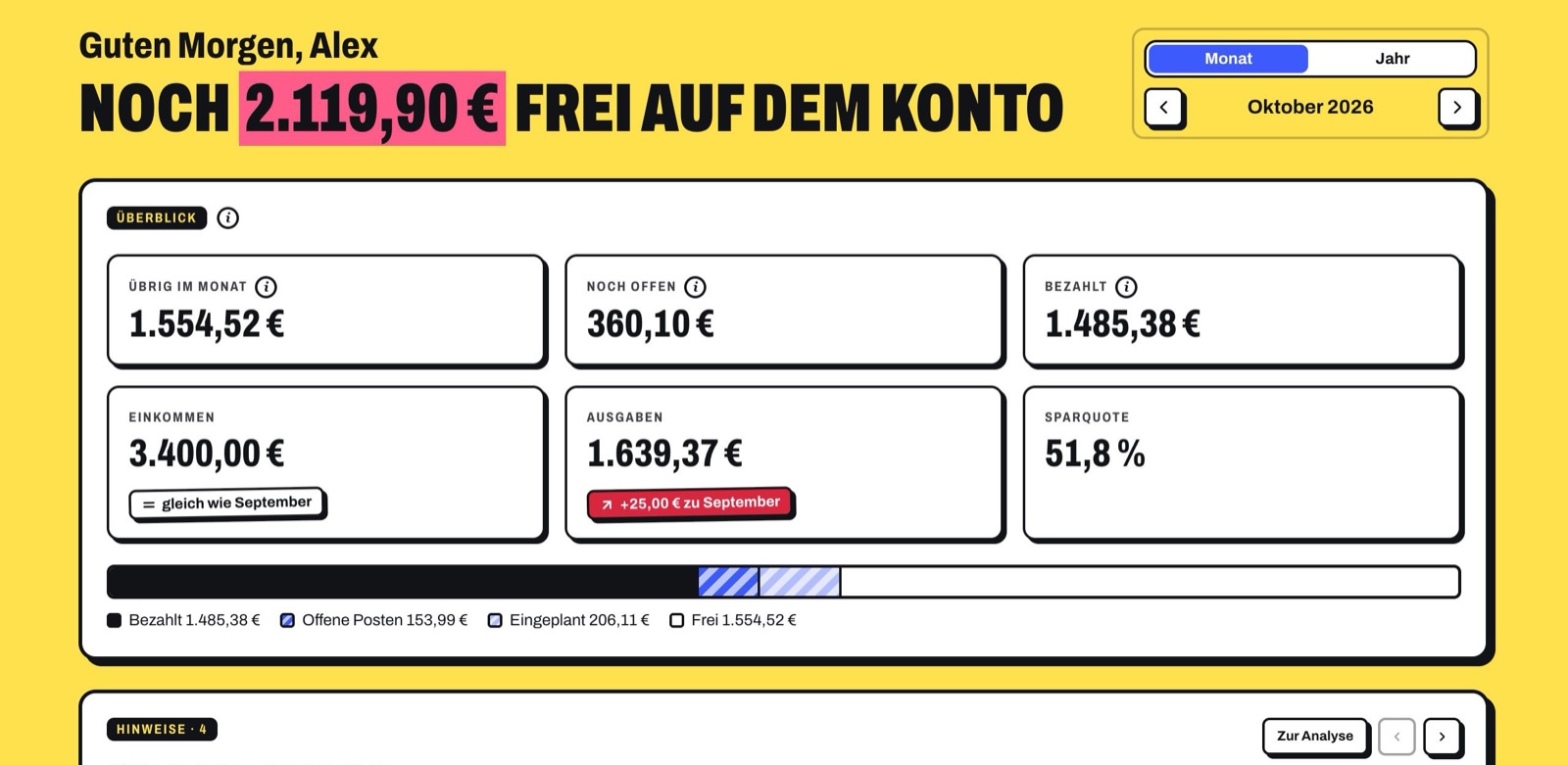
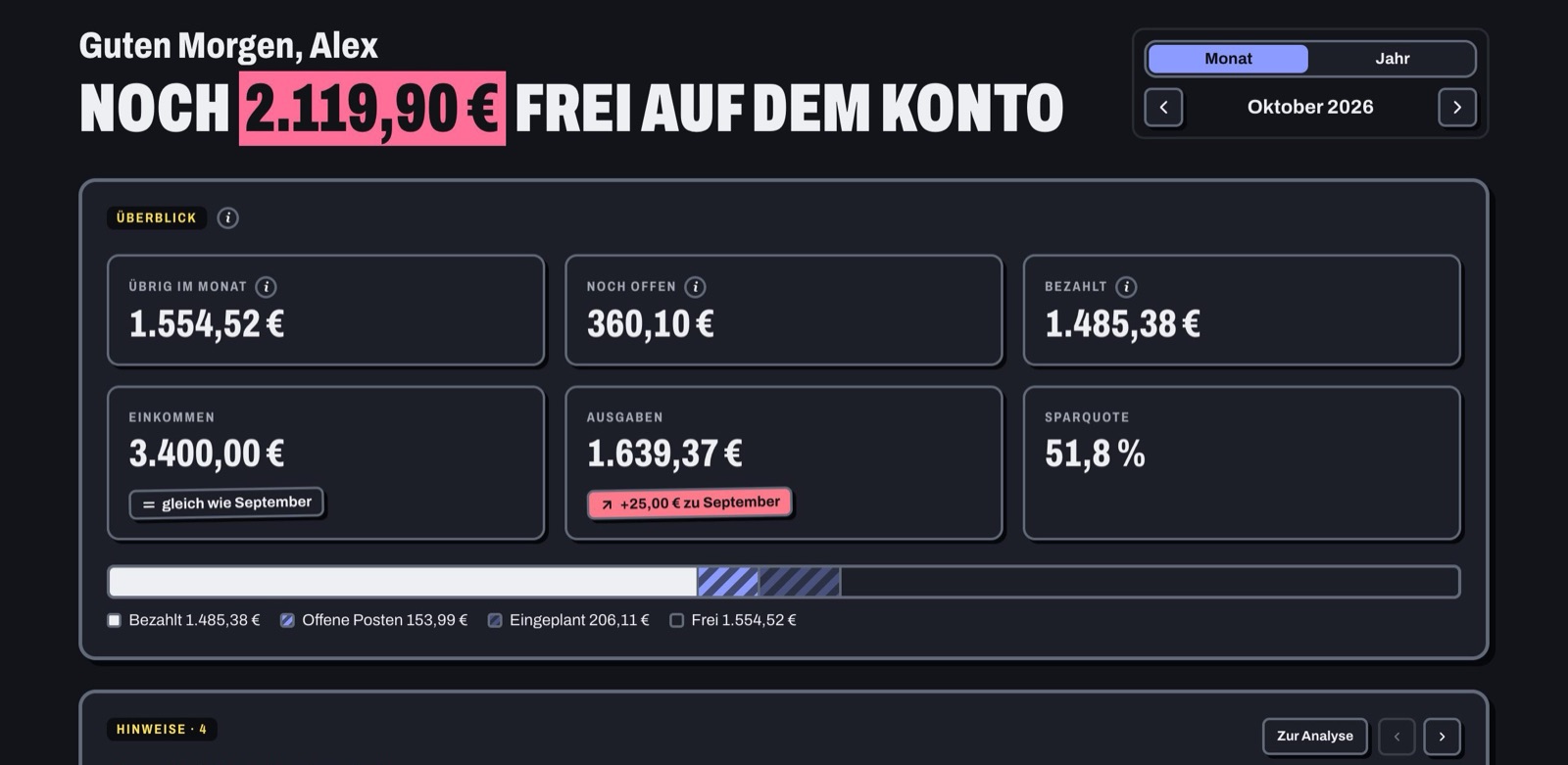
Ausgabentracker calculates this for you. Because all expenses sit on their day in the calendar, it knows what’s still open until the end of the month. The overview shows “free on the account”: balance minus everything still going out.
- Paid, still open and freely available in one bar
- Accounts like a savings account can be excluded from “free”
- Budgets per category with a warning before it gets tight
Frequently asked questions
Does the overdraft count as available money? No. An overdraft is an expensive loan. Plan so that your account doesn’t go negative by the end of the month.
How often should I look at the number? Before larger spontaneous purchases, and once a week is enough. If you look every day, you tend to worry more rather than decide better.
What about credit card spending? The credit card statement usually comes once a month as a total. Still count card payments already made as open debits, otherwise you think you have more than you do.
And if my salary arrives in the middle of the month? Then simply calculate until the next payday instead of the end of the month. What matters is the period between two paydays.