Building an emergency fund: how much and how fast
An emergency fund is money for events you can’t plan: losing your job, a car written off, an expensive repair in your home. It makes sure such an event is annoying but doesn’t lead to debt. For many people it’s the first and most important saving step.
How much is enough?
A widespread rule of thumb is three to six months of expenses. This means your necessary expenses, i.e. what you’d still have to pay in a crisis: rent, groceries, insurance, mobility, loan payments. Spending on leisure or holidays can be cut in an emergency.
- Closer to three months: secure employment, two incomes in the household, no children.
- Six months or more: one income for several people, self-employment, fixed-term contract, home ownership with repair risk.
| Rent incl. utilities and electricity | €1,058.00 |
| Groceries and toiletries | €400.00 |
| Insurance | €90.00 |
| Mobility | €150.00 |
| Phone and internet | €60.00 |
| Necessary per month | €1,758.00 |
|---|
Where the emergency fund should be
- Quickly available: within a few days, without risk of loss. A savings account is the usual choice.
- Separate from everyday spending: not in the checking account, otherwise it quietly becomes part of the everyday budget.
- Not in volatile investments: shares or funds may be down exactly when you need the money.
This guide is no substitute for investment advice. Which bank and which account suit you depends on conditions that change all the time.
Building it step by step
- Interim goal: one month of expensesEven that covers many smaller emergencies and motivates you for the rest.
- A fixed savings rate by standing orderRight after your salary arrives. How much is possible is shown in What’s left at the end of the month.
- Use extra paymentsPut holiday and Christmas bonuses, tax refunds or bonuses fully or partly into the emergency fund.
- Top it up after a withdrawalThe emergency fund is there to be used. Afterwards, topping it up takes priority over new savings goals.
How it works in Ausgabentracker
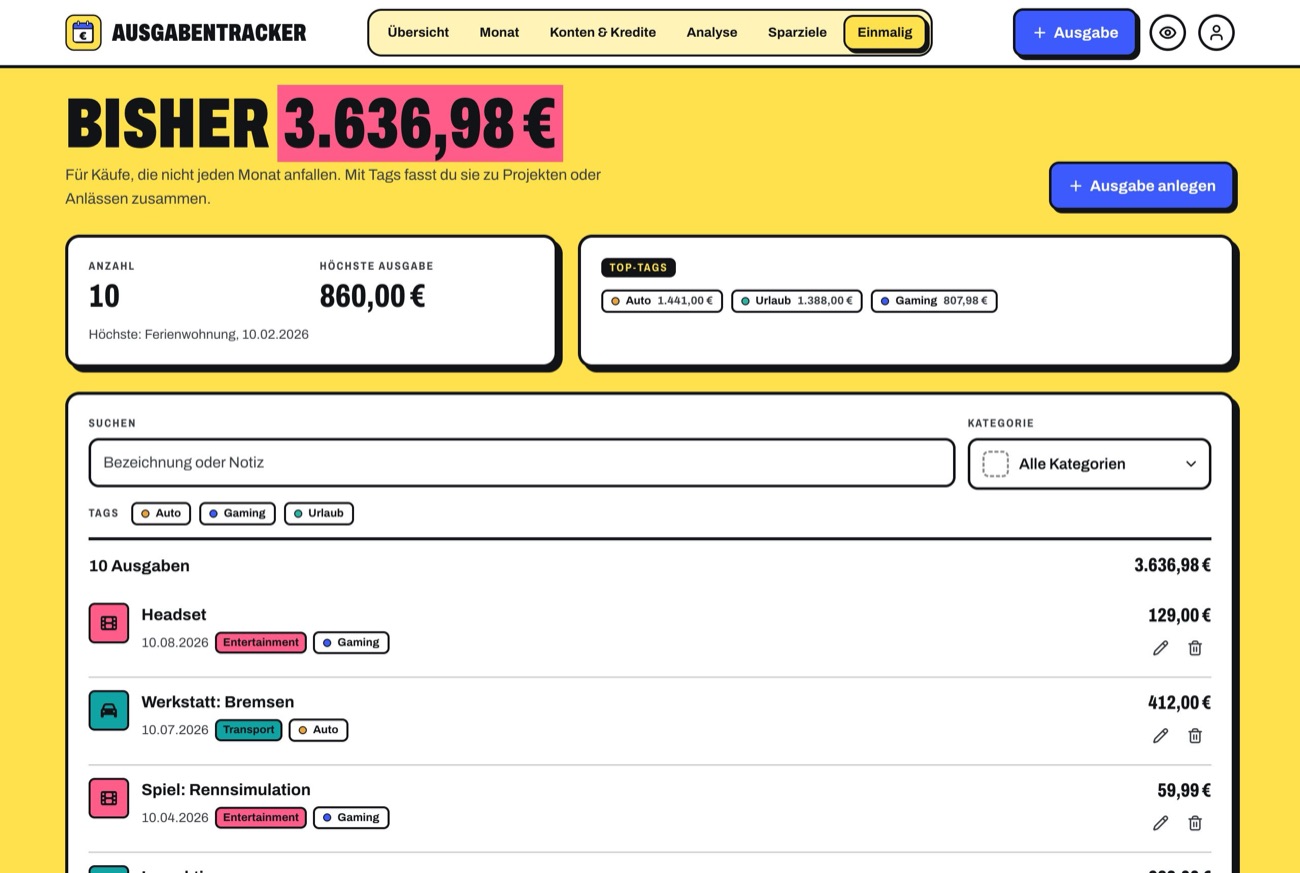
Create the emergency fund as a savings goal, with a target amount and starting amount. Ausgabentracker shows the progress and calculates how much you need to put aside monthly if you set a target date.
- Savings goals with target amount, progress and savings rate
- Savings account as an account of its own, optionally not counted toward “free”
- Net worth history from balances and remaining debts
Frequently asked questions
Does the savings for my holiday count? Only if you’re willing to give up the holiday if an emergency happens. It’s clearer to keep the emergency fund and holiday reserve separate.
Should I pay off debt or save first? Many start with a small emergency fund, such as one month of expenses, and then pay off expensive debt like an overdraft. After that the emergency fund is built up further. For specific debts, debt counselling helps.
When is an emergency really an emergency? When the expense is unexpected, necessary and urgent: a broken heating system, a car repair for getting to work, a loss of income. A sale offer doesn’t count.
How long does it take to build? That depends on your savings rate. An example with made-up figures: at €200 a month, €5,300 is reached after a little over two years, faster with extra payments.