
Planning for annual and irregular expenses
Many months feel normal, and then everything comes at once: car insurance, liability insurance, birthdays, the washing machine gives up. These aren’t surprises but expenses that just don’t come every month. If you know them and put something aside for them every month, you get through these months relaxed.
Typical expenses that don’t come every month
- Annual, fixed date: car insurance and vehicle tax, liability, contents insurance, annual subscriptions, membership fees.
- Quarterly: broadcasting fee (depending on payment method), some insurances and clubs.
- Annual, fixed occasion: birthdays, Christmas, holidays, utility bill settlement.
- Irregular: repairs to the car or household appliances, glasses, dentist, new clothes, phone.
The method: put money aside monthly
- Make a yearly listAll items with amount and due month. The bank statements of the last twelve months help make it complete.
- Divide the total by twelveThat’s the amount you put aside every month.
- A separate account or sub-accountA savings account or sub-account separates the money from everyday spending. That way you don’t spend it by accident.
- Transfer when dueWhen the bill comes, you take the money back from the reserve account.
| Car insurance (January) | €540.00 |
| Vehicle tax (March) | €120.00 |
| Liability and contents insurance (May) | €190.00 |
| Birthdays and Christmas | €600.00 |
| Repairs, estimated | €400.00 |
| Annual subscriptions and fees | €150.00 |
| Yearly total / put aside per month | €2,000.00 / €166.67 |
|---|
The unforeseeable: a reserve for repairs
Not everything can be scheduled. For repairs and replacements, an estimate from the past helps: what did you spend on them in the last two or three years? You can plan this amount per year too. For real emergencies such as losing your job, the emergency fund is there, not this reserve.
How it works in Ausgabentracker
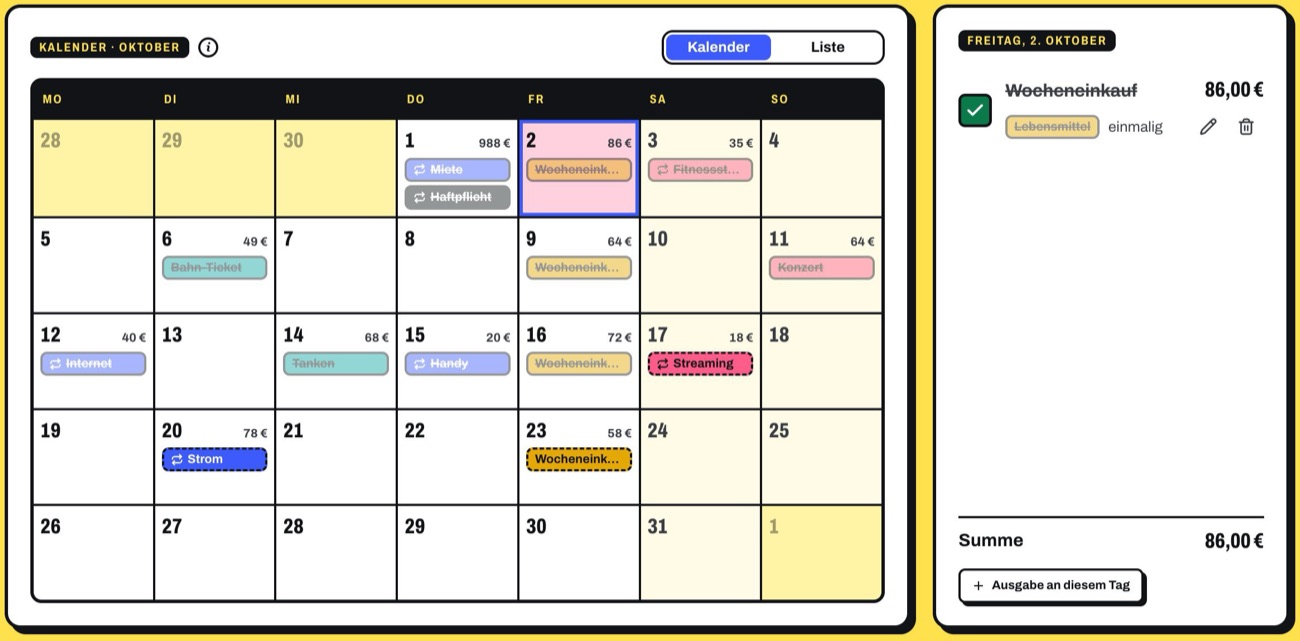
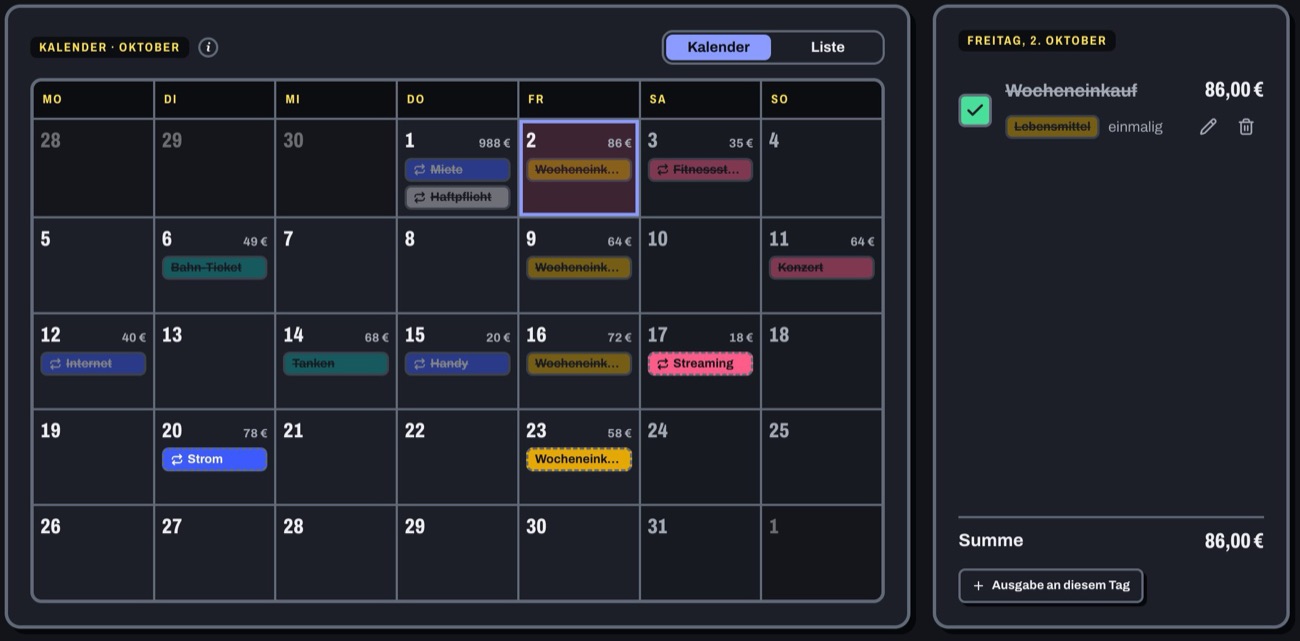
You enter annual and quarterly expenses once as a recurring expense. They then sit in the right month on the right day. The reserve for annual costs spreads them across the months: the app calculates a monthly rate from all quarterly, semi-annual and annual costs and books it as a savings rate. When a debit is due, the reserve pays it.
- Recurring: monthly, quarterly, semi-annually or annually
- One reserve for all annual costs; the rate adjusts by itself
- A warning if the pot isn’t enough for one of the coming dates
- Optionally with its own account, such as a savings account, and a starting amount
- Reminder before the due date by email or push
Frequently asked questions
One account for all reserves or several? One reserve account is usually enough if you keep track internally of how much is meant for what. Some banks offer sub-accounts, which makes the separation more visible.
What if the reserve isn’t enough yet? In the first year, money is often missing for the first big bill. Then pay this bill from the current month and keep putting money aside monthly afterwards. From the second year the account is full in time.
Does the utility bill back payment belong here? Yes, if it comes up regularly. Estimate it from the last statements and put part aside each month. If you get a refund, it goes into the reserve.
How do I estimate gifts realistically? Go through the occasions of a year, birthdays, Christmas, weddings, and write down an amount for each. The total is usually higher than you’d think.