Planning big purchases: car, holiday, tech
A new laptop, the summer trip, the next car: big purchases are usually foreseeable long in advance. Still, they often end up on the credit card or in instalment financing. With a savings goal of its own for each plan and an honest look at the total costs, they become plannable.
Why instalments are rarely the best idea
Instalment purchases make large amounts look small but tie up your income for months or years. Depending on the offer, interest comes on top. With “0% financing” it pays to read the small print, for example about fees or conditions. If you save beforehand, you decide freely and can choose when to buy.
One savings goal per plan
- Set the amountRealistically, including accessories, shipping, registration or travel insurance.
- Set the dateWhen do you want to buy or travel?
- Work out the savings rate(Target amount − already saved) ÷ months until the date.
- Check whether the rate fitsIf it’s too high, move the date or lower the amount. The emergency fund stays untouched.
| Target amount | €1,800.00 |
| Already saved | €1,150.00 |
| Still needed | €650.00 |
| Months until booking | 5 |
| Savings rate per month | €130.00 |
|---|
Don’t forget follow-up costs
Some purchases keep costing money afterwards. For a car that’s insurance, tax, fuel, maintenance and repairs; for a pet food and vet; for tech subscriptions and accessories. Convert these ongoing costs to a monthly amount before buying and check whether they fit your budget. How is explained in Record, review and reduce fixed costs.
What does a topic really cost you?
Individual purchases seem small, but over the years they add up. If you collect all expenses around the car or a hobby under one keyword, you see the real total: tyres, service, repairs, accessories. That helps with decisions like “Is having my own car still worth it?” or “How much is this hobby worth to me?”.
| Winter tyres | €640.00 |
| Service | €389.00 |
| Garage: brakes | €412.00 |
| One-time expenses per year | €1,441.00 |
|---|
How it works in Ausgabentracker
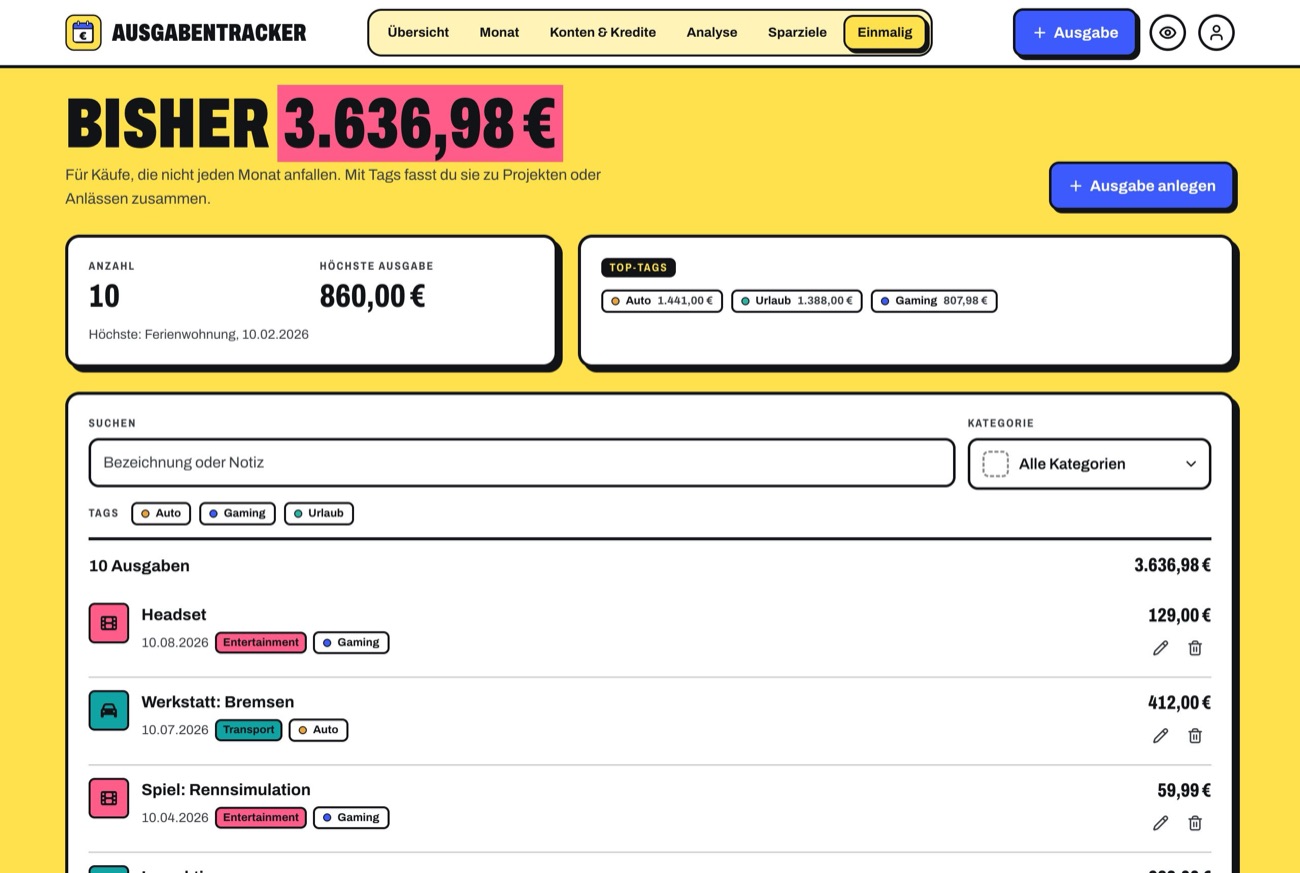
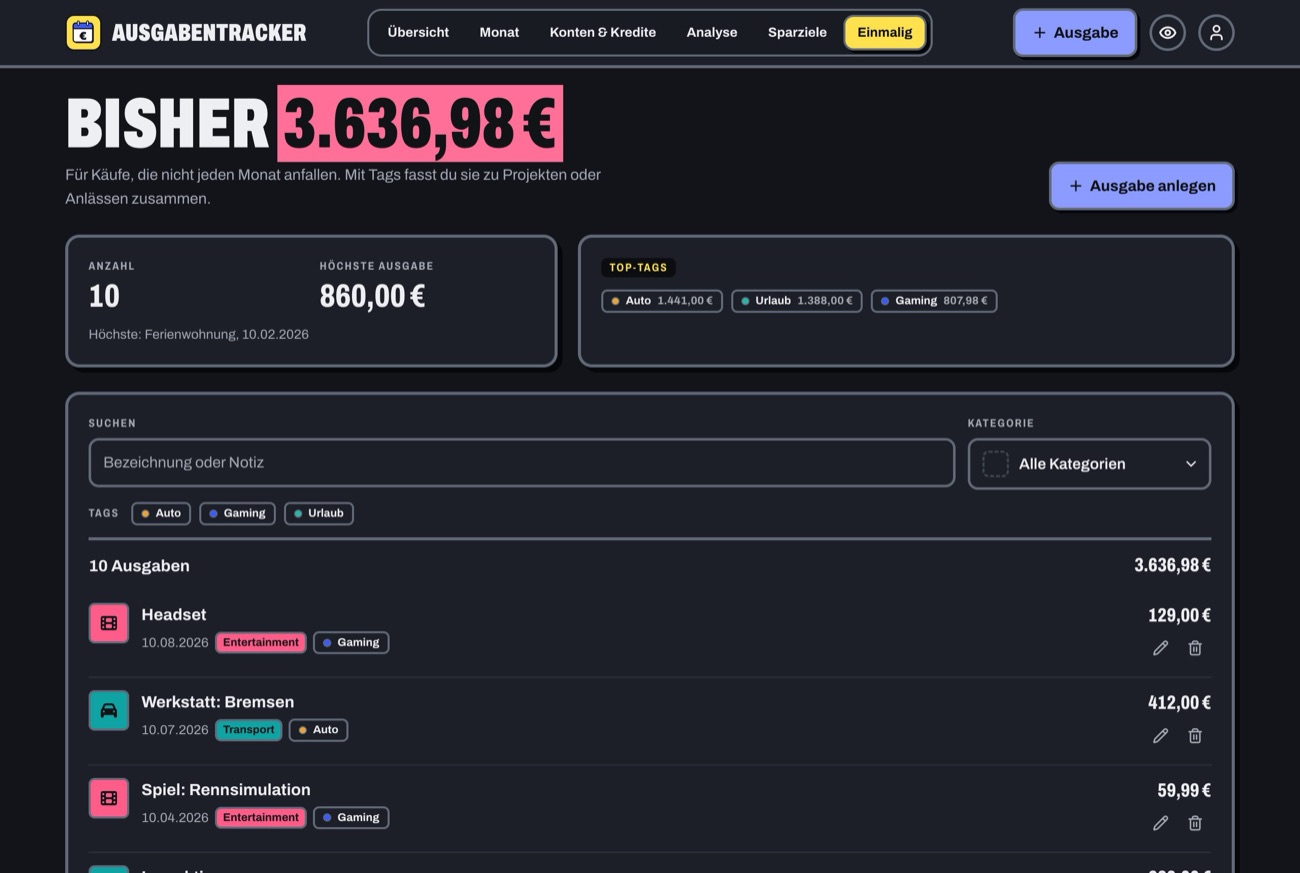
You enter larger purchases as one-time expenses, separate from the monthly budget, and add tags like “car” or “holiday 2026”. That way you see over the years what a topic costs. For saving up you create a savings goal with a target date.
- One-time purchases with tags and totals per topic
- Savings goals with target amount, date and monthly savings rate
- Loans with remaining debt and repayment plan, in case you finance after all
Frequently asked questions
When does financing still make sense? When a purchase is urgently needed and the reserve isn’t enough, for example a car for getting to work. Then it pays to compare total costs and terms. The payment should fit your budget for the long term.
Used or new? For many things, from cars to smartphones, the loss in value is greatest in the first years. Used can be much cheaper if condition and warranty are right.
How many savings goals at once? Better a few with clear priorities. First the emergency fund, then the goals with the nearest date.
What about sales? A discount on something you planned anyway is good. A purchase because of the discount is a new expense. With a savings goal you can strike when a good offer comes along.