
Record, review and reduce fixed costs
Fixed costs are the amounts that go out automatically every month or every year. Because they’re so taken for granted, hardly anyone looks at them regularly. That’s exactly why a thorough look pays off: a saving on fixed costs works every month by itself, without you having to cut back in everyday life.
What counts as fixed costs?
Fixed costs are expenses that come up regularly in the same or a similar amount and are based on a contract. They differ from variable expenses like groceries, where you decide anew every month.
- Housing: rent or mortgage payment, utilities, electricity, gas, broadcasting fee.
- Communication: phone, internet, streaming and software subscriptions.
- Insurance: liability, contents, car, disability and others.
- Mobility: vehicle tax, transit subscription, leasing payment.
- Memberships: gym, clubs, donations by standing order.
Step 1: find all fixed costs
- Twelve months of bank statementsThree months aren’t enough: insurance, vehicle tax or annual subscriptions often only show up once a year. Many banks offer a transaction export as CSV, see Importing bank transactions.
- Mark direct debits and standing ordersEverything that is debited regularly goes on the list, with amount and rhythm.
- Don’t forget the credit cardMany subscriptions run via credit card or payment services and only appear as a total on the checking account.
- Convert to a monthly amountAnnual amount divided by 12, quarterly amount divided by 3. Only then do you see what a contract really costs you.
| Rent incl. utilities | €980.00 |
| Electricity | €78.00 |
| Internet | €39.99 |
| Phone | €19.99 |
| Liability insurance (€90 a year) | €7.50 |
| Car insurance (€540 a year) | €45.00 |
| Streaming and music | €29.98 |
| Gym | €34.90 |
| Total per month | €1,235.36 |
|---|
Step 2: check where you can save
- Electricity and gas: after the minimum term, comparing tariffs often pays off. Look at the price guarantee and notice period, not just the first-year bonus.
- Phone and internet: old contracts are often more expensive than current offers with more included. A call to your current provider often helps already.
- Insurance: are there overlaps, such as cover already provided by your credit card or your partner’s policy? Does the deductible fit? Paying annually is often cheaper than monthly.
- Subscriptions: which ones do you really still use? More on this in Finding subscriptions and price increases.
- Fees: account fees, credit card, payment services. Small amounts that add up over the year.
Step 3: keep at it
Fixed costs change quietly: price increases come by an email you overlook, new subscriptions are created with one click. A yearly fixed-cost check in your calendar and a list of notice periods prevent costs from creeping back in.
How it works in Ausgabentracker
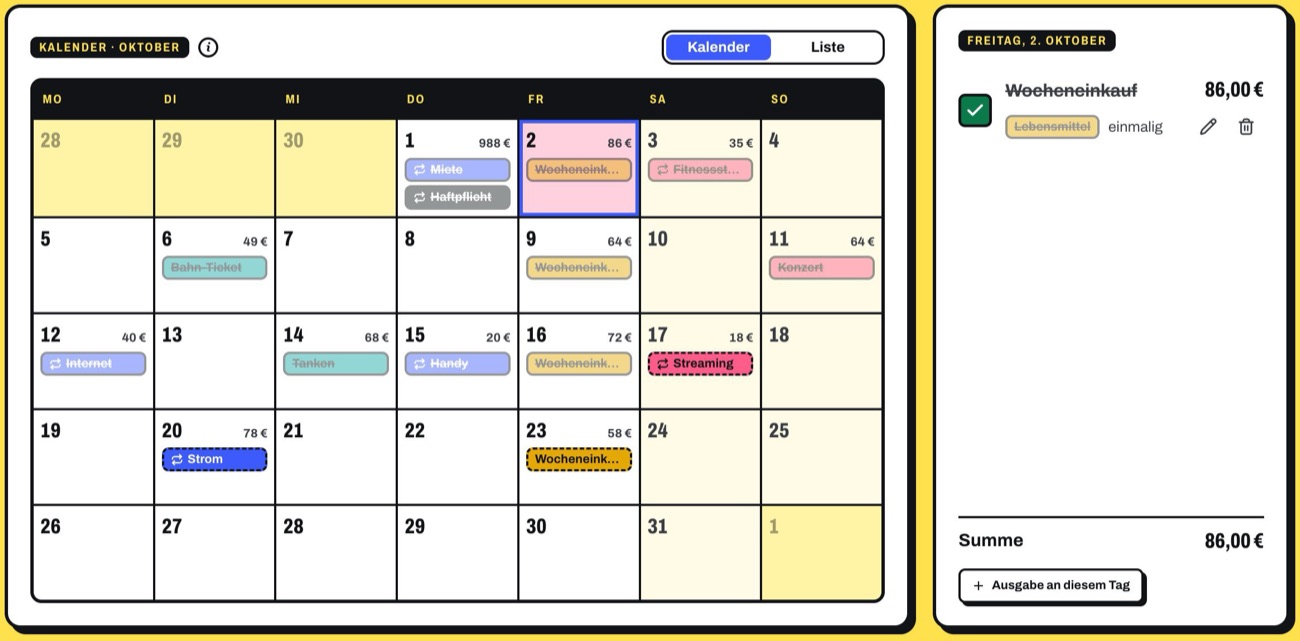
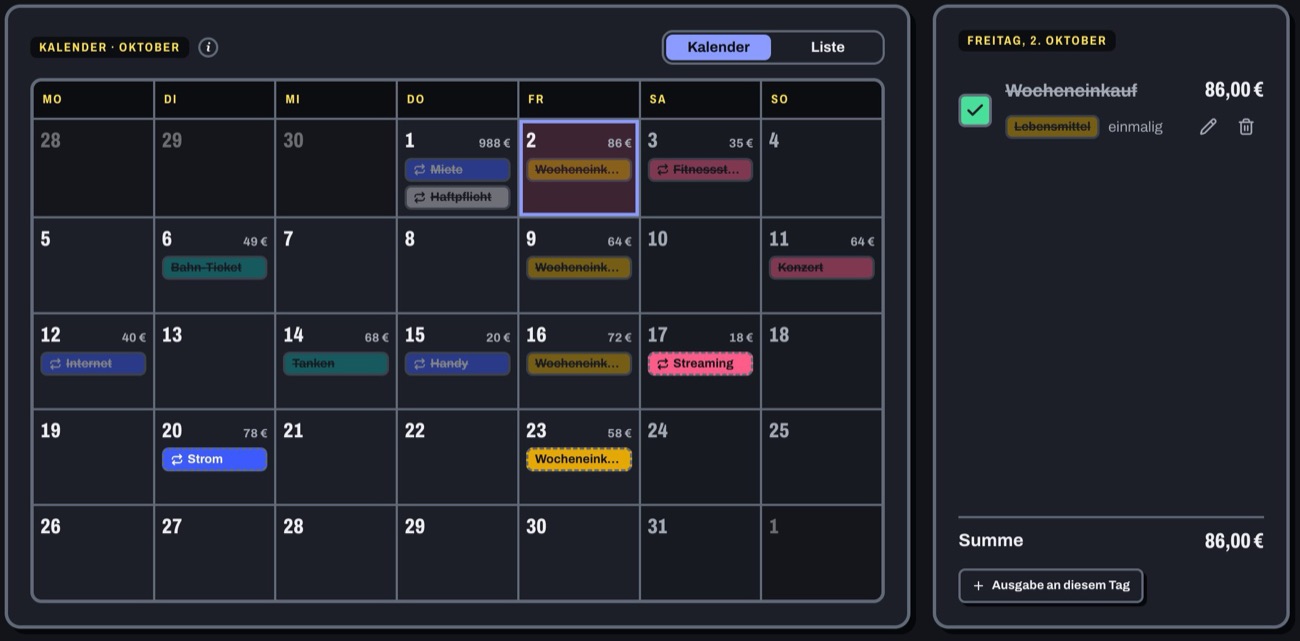
You enter fixed costs once as a recurring expense, monthly, quarterly or annually. They then sit on their day in the calendar. If a price goes up, you enter it from an effective date; the old months stay as they were.
- Analysis: fixed costs versus spontaneous spending, also year on year
- A tip when a subscription has become more expensive
- Reminder before payments are due, by email or push
Frequently asked questions
How high may fixed costs be? There’s no fixed limit. As a rough guide, the 50/30/20 rule suggests half of net income for all necessities. If your fixed costs are well above that, there’s little room left for everyday life and reserves.
Is switching worth it for a few euros? Look at the year: €8 a month is €96 a year, with several contracts quickly a three-digit amount. The effort of switching is usually one-off and manageable.
When can I cancel? It says in the contract or on the last invoice. Many contracts can be cancelled at short notice after the minimum term. Note the notice period right away when you add the contract to your list. How to calculate the last day to cancel is explained in Cancel contracts on time.
Are loan payments fixed costs? Yes. They’re agreed and run every month. Plan for them and keep an eye on the remaining debt.