
Setting realistic budgets per category
A budget is a limit you set yourself, for example €400 a month for groceries. But it only works if it fits your life. A budget that’s too tight is blown in the second week, and after that you stop looking.
Which categories need a budget
Budgets pay off where you decide yourself every month how much you spend. Fixed costs like rent or insurance are fixed and don’t need a budget, just a place in the plan.
- Groceries and toiletries: the largest variable item in most households.
- Mobility: fuel, tickets, parking. Subscriptions like a monthly transit pass are fixed costs.
- Leisure and eating out: this is where people most often spend more than they thought.
- Clothing, household, gifts: varies a lot, so better look at the year (see below).
Deriving budgets from real numbers
- Record two to three monthsWithout a budget, just keep track. That way you see your real spending. How to do this without much effort is explained in Keeping a household budget.
- Calculate the averageDon’t leave out outliers like a birthday dinner. Such months come up again and again.
- Starting budget = averageDon’t cut in the first month. The first goal is to stick to the budget.
- Then lower it gradually5 to 10 percent a month until you notice it’s getting tight. That’s where your realistic budget is.
| July | €452.30 |
| August | €398.10 |
| September | €431.60 |
| Average, starting budget | about €427 |
|---|
Irregular categories: the yearly view
Clothing, gifts or repairs don’t come up equally every month. A monthly budget of €50 for clothing is quickly blown in winter with a new jacket, and in summer it goes unused. Better: estimate the yearly amount, divide by twelve and put that amount aside every month. How that works is explained in Plan for annual expenses.
What to do when the budget is blown?
- Don’t give up: an overspent month is a data point, not a failure.
- Shift money: if €30 is missing for groceries, take it deliberately from leisure, not from the reserve.
- Adjust the budget: if you’re over three months in a row, the budget was unrealistic.
How it works in Ausgabentracker
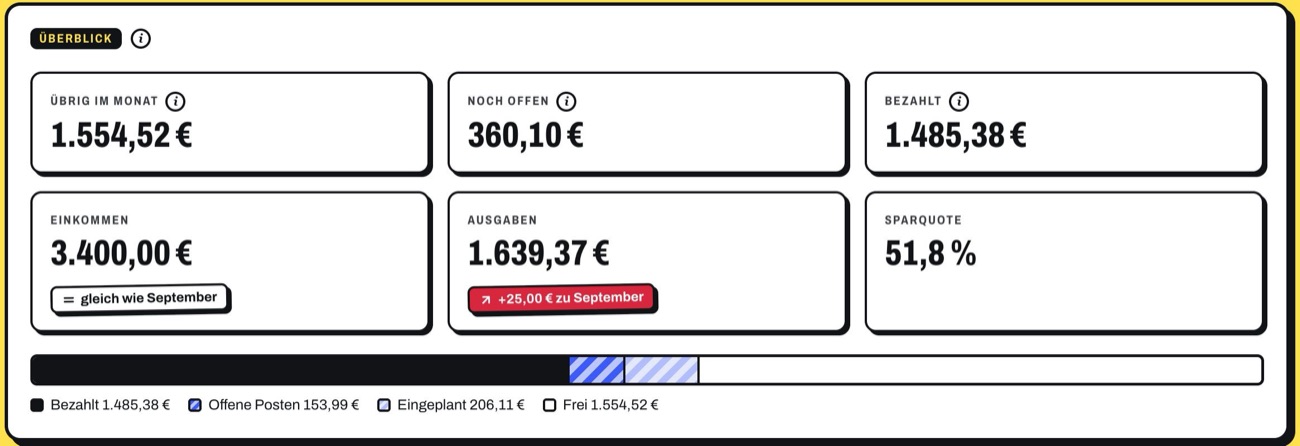
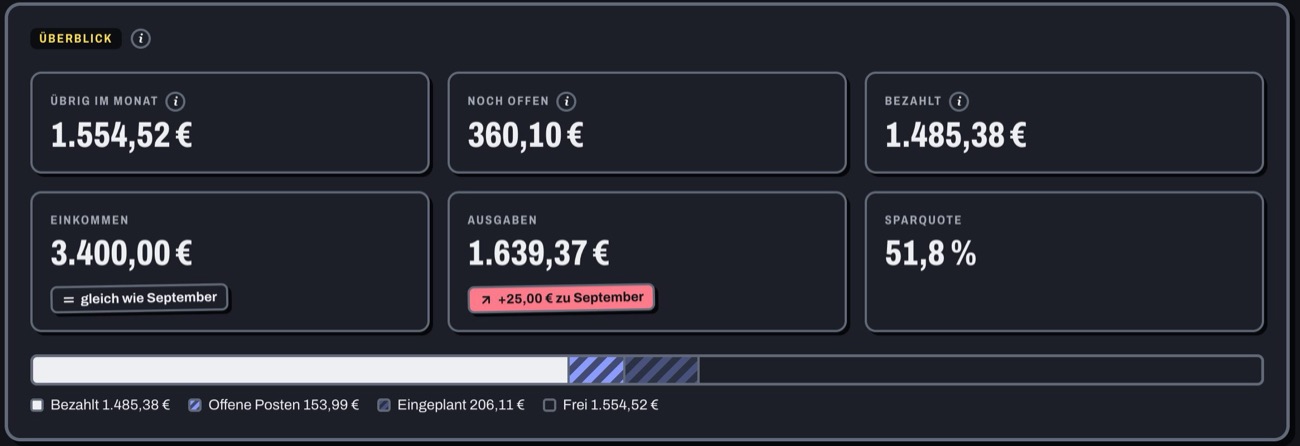
You can set a monthly budget for every category. The overview shows how much of it is already gone, and the app speaks up before it gets tight.
- Monthly budget per category, your own categories with colors
- A tip when a budget gets tight
- Analysis over the year: which category stands out when
Frequently asked questions
How many categories do I need? Five to eight for everyday life are enough to start. More only pay off if you want to watch a category specifically, such as “eating out” separately from “groceries”.
What do I do with leftover budget? Don’t carry it over to the next month automatically, otherwise the budget grows unnoticed. Better: move it deliberately into the reserve or a savings goal.
Do couples need a shared budget or separate ones? Both work. A common, proven approach: shared budgets for household and groceries, plus a fixed personal budget for each person that nobody has to justify.
How often should I adjust budgets? Monthly in the first three months; after that a look every quarter is enough, or when something changes, for example a move, a new job or a baby.