
The 50/30/20 rule explained simply, with a worked example
The 50/30/20 rule is a well-known rule of thumb for roughly dividing your income: half for the essentials, just under a third for the nice things and a fifth for reserves. It isn’t a law, but it’s a good starting point if you don’t have a plan yet.
The three pots
- 50% needs: everything you need to live and can hardly change in the short term. Rent and utilities, electricity, groceries, insurance, getting to work, minimum loan payments.
- 30% wants: everything that makes life nicer but could be done without. Streaming, restaurants, clothing beyond the necessary, hobbies, holidays.
- 20% saving: emergency fund, reserves for larger purchases, retirement savings and extra repayments.
The line between need and want isn’t always clear. A car can be necessary; the bigger model is a want. What matters is that you’re honest with yourself and stick to your classification.
Worked example
| Needs (50%) | €1,500.00 |
| Wants (30%) | €900.00 |
| Saving (20%) | €600.00 |
| Total | €3,000.00 |
|---|
If your needs come to €1,800 in this example, €300 is missing from one of the other pots. Then the question isn’t “Am I keeping to the rule?” but “Where do I take the €300 from without cutting saving completely?”
When the rule doesn’t fit
In expensive cities, rent including utilities alone often takes 40 percent of income. Then 50 percent for all needs is unrealistic. That isn’t failure but a reason to adjust the shares.
- 60/20/20: more for needs, less for wants, saving stays.
- 60/30/10: save less for a while, for example during training or after a move.
- 40/30/30: if your housing is cheap, you can put more aside.
How to put the rule into practice
- Note your net incomeIf your income varies, take the lowest month of the last six months.
- Assign your fixed costsAlmost all fixed costs are needs, subscriptions are usually wants. How to record fixed costs is explained in Record, review and reduce fixed costs.
- Set budgets for everyday lifeGroceries count as needs, leisure as wants. More on this in Budgets per category.
- Compare after a monthHow much actually went into each pot? Where were you off?
How it works in Ausgabentracker
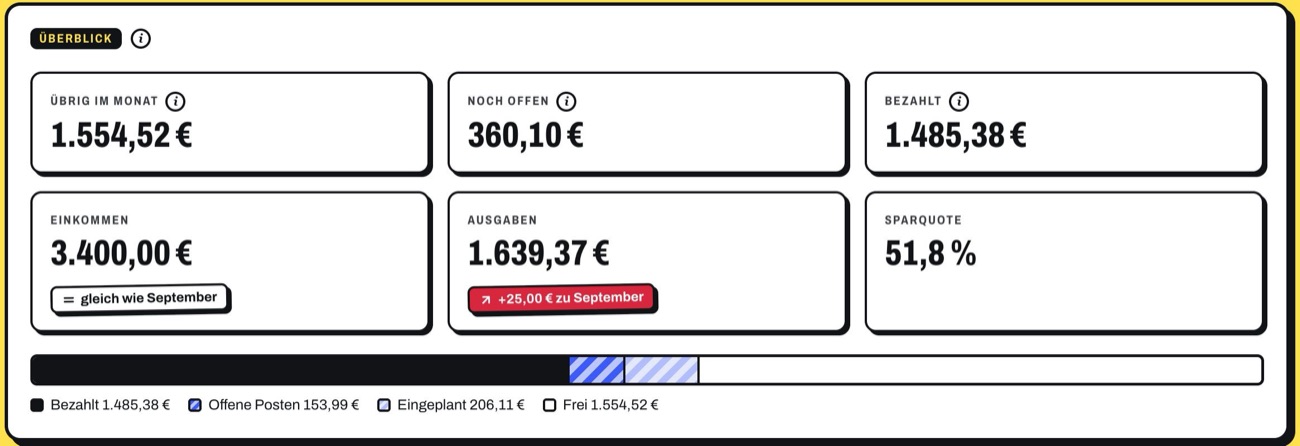
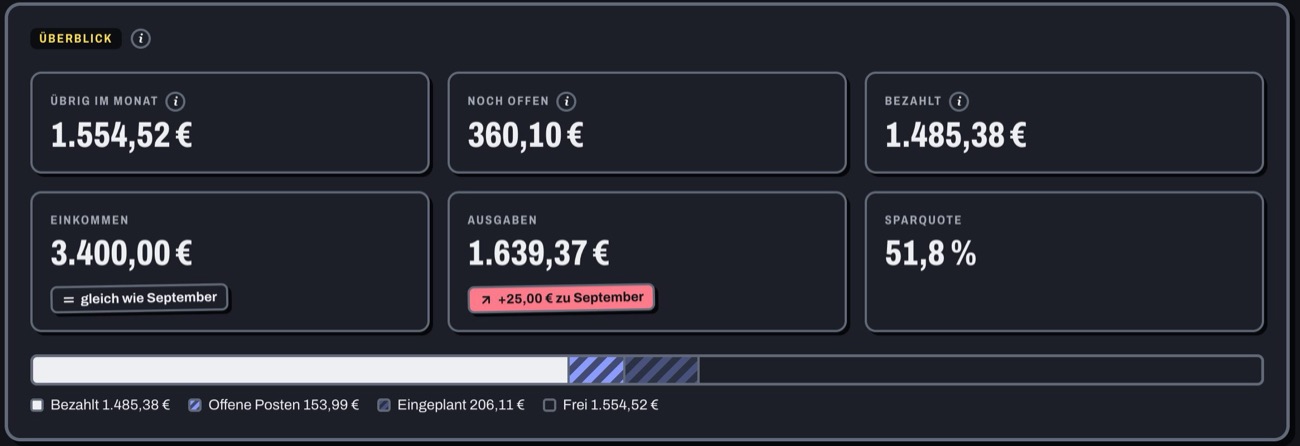
Set a monthly budget for categories such as groceries or leisure. The overview shows income, expenses, what’s left and your savings rate; the analysis separates fixed costs from spontaneous spending.
- Monthly budget per category with a warning before it gets tight
- The month’s savings rate at a glance
- Year comparison: how the shares develop over the months
Frequently asked questions
Does the rule apply to gross or net income? To net income, i.e. what arrives in your account after taxes and social security contributions. Employer benefits such as a company pension that is deducted beforehand can be counted toward saving in your head.
Does repaying a loan count as saving? The minimum payment belongs to needs because you have to pay it. Extra repayments you make voluntarily can count toward the saving share: they reduce your debt and therefore future interest.
What if I can’t save anything at all? Then first take a look at your fixed costs, see Record, review and reduce fixed costs. Small amounts count too: €25 a month is a €300 emergency fund after a year.
How do I handle pay rises? A simple rule of thumb: at least half of the rise goes into the saving share. That way your standard of living goes up, but your reserves grow faster.